Why Clay? Why now?
Over the last decade, clay has moved from the margins of contemporary art into a much more central position. Major galleries and museums have increasingly embraced ceramics, while artists across disciplines have turned to clay as a medium for thinking through questions of history, colonialism, identity, land, and the climate crisis. The discussion begins from this shift, asking not just why clay is so visible now, but what makes it such a powerful material for artists and curators today.
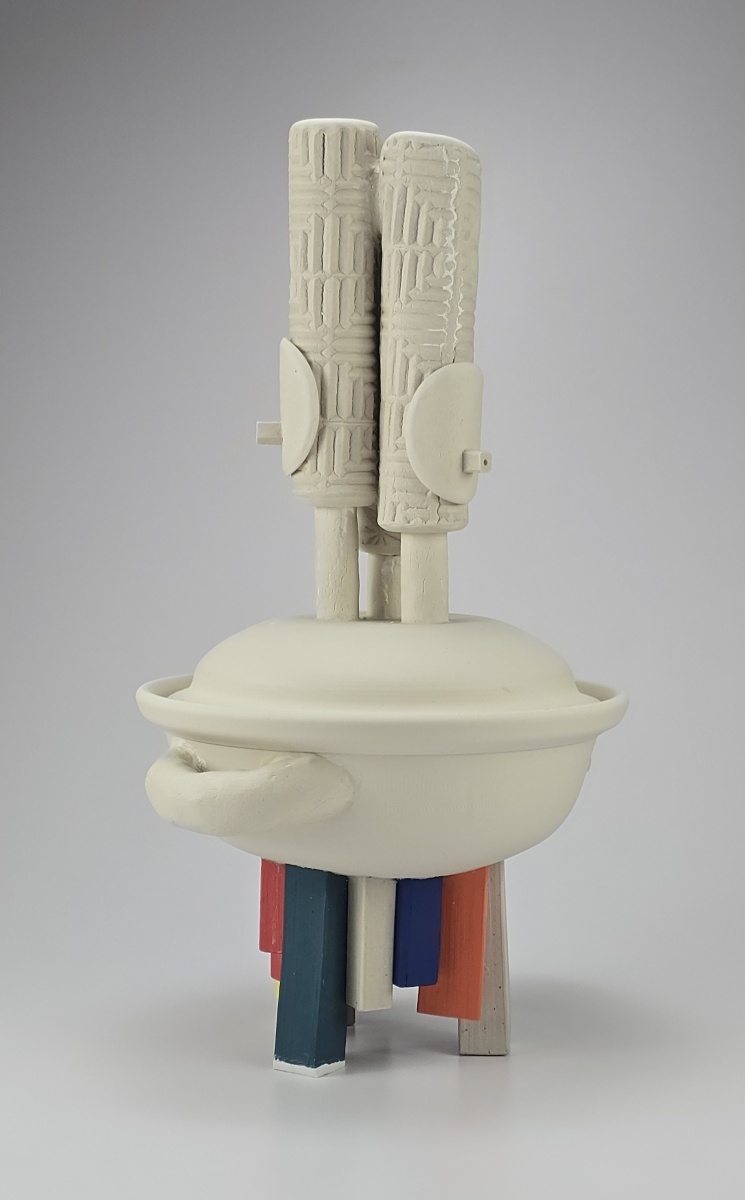
I was thinking about that 10 to 12 years ago when I noticed that all the major galleries were exhibiting clay and ceramics, and even adding artists primarily working in clay to their stables. Before this, I'd seen the work of Betty Woodman and Peter Voulkos and Ken Price in major museums and galleries, but there was a limited and biased view of ceramics in the US, although that seems to have changed over the last decade or so. Not only were ceramic artists joining those galleries that had previously focused on sculpture and painting, but artists who weren't working in clay started to experiment with it, or perhaps they just got brave enough to bring their clay work out of the studio? As we know, for hundreds and hundreds of years artists have been working with clay on its own and in tandem with other mediums, and in various stages of art production - from studies to moulds to finished work, and even functional objects. When I was organising my exhibition Ceramics in the Expanded Field (2021-2023) at MASS MoCA, I was thinking about the 10th anniversary of the ICA Philadelphia's Dirt on Delight (2009). which showcased clay work spanning four generations.
It was a trailblazing exhibition for a museum focused on contemporary art. I wanted to take the pulse 10 years on - to ask what is happening with clay now? While the works in Dirt on Delight were mostly table-top sized, the vast gallery space at MASS MoCA allowed artists who were already working at a large scale to present that work, and it also offered artists who had never been given an opportunity to work so ambitiously the space to do so.
So, 'Why clay? Why now?' is perhaps a question only for some. For many, clay has always been a fertile medium.
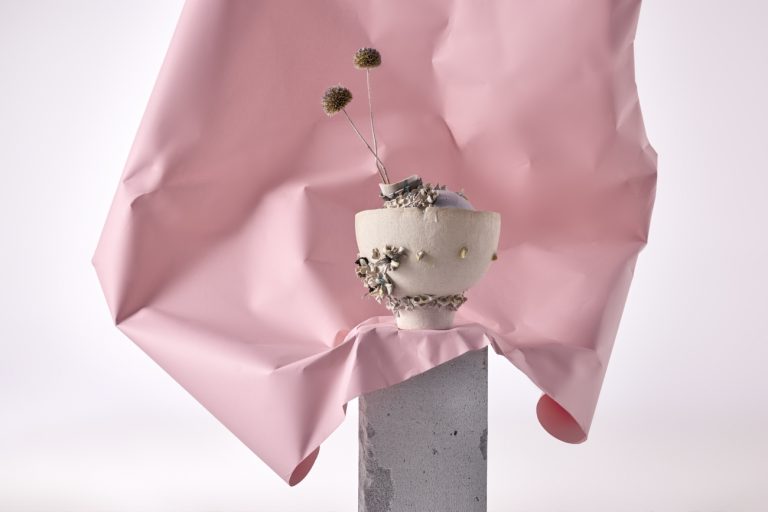
Why now? is connected to the exhibition Body Vessel Clay, Black Women, Ceramics & Contemporary Art (2022). My personal interest is rooted in ceramics in Nigeria, in British Nigeria, and growing up in Nigeria, and also the Middlesbrough Institute of Modern Art... from working in an institution which has a phenomenal collection of ceramics. I'm very much of the generation looking at the legacies of colonialism, and how that relates and traces into the present. It's these kinds of questions that my curation of the exhibition was trying to raise across two different locations, across different time periods and geographies.
I think one reason why clay is so potent today is because we are in the midst of a planetary crisis about the survival of our species. A lot of us are trying to understand this new reality and reimagine our relationship to the land - and that clay can actually help us do this. Talking Earth, a public art commission by Santee Smith at the Gardiner Museum, works toward this realignment of our relationship to the earth while also decolonizing museum spaces. The project was led by a circle of Indigenous advisors who determined the scope, focus, and selection of the artist.
This piece does the kind of work that only ceramics can do right now. The current moment for ceramics is informing artists. in other ways as well. We just closed an exhibition by multidisciplinary Canadian artist, Shary Boyle, who uses ceramics within a broader practice of social critique.
Younger artists - even packs of high school students - were engaging with the work so substantively. It was incredibly restorative for me as a curator to see how deeply people were willing to go into some of the tough questions that Shary Boyle was raising in her work, much of it involving ceramics. Many people are able to see clay in a different way now, and with this growing literacy people are actually able to perceive ceramics with more depth and nuance. We can see this change, like Susan says, over the last ten or so years. What makes clay powerful now is that it has a logic to it. Clay is not just a physical medium but also a way of thinking... it's a way of understanding yourself in the world..,.